Showing posts with label Taming Temper Tantrums. Show all posts

Saturday, April 4, 2015

How to Teach Kids About Processing and Handling Their Emotions

First we had a Time Out chair.
Then we nixed the idea of punishments altogether and began leaning towards effective gentle discipline- which led to the Calm Couch.

And now we have this: The Safe Place.


We call it the Safe Place because it's the one place in our house where our kids can go if they are dealing with difficult emotions and safely process them with the help of the visual and tangible aids I placed there.

When a tantrum ensues I ask my child if she/he would like to go to the safe place so we can handle it. Sometimes they go there on their own. Sometimes the emotions get the best of them and they refuse to go to the Safe Place at first.

Both are fine. I never force my kids to go there as that would defeat the purpose of it being a Safe Place. It is not a place of punishment but a place of rest and comfort.

Because dealing with emotions is hard. ESPECIALLY if you are little and you only understand 3 basic emotions: Happiness, Sadness, and Fear.

The goal of our Safe Place is to encourage our children to understand the more complex underlying emotions that hide behind our basic emotions and teach them how to cope with them in a safe and productive manner.

So we placed a few key items near the extremely large and comfy Papasan Chair (where we both fit if necessary) that gently encourage and teach these principals.

1. A basket of books that focus on Emotions. A few of the titles we chose are:


2. A large mirror: This is especially helpful for younger children so they can see their emotions in action. My 3 year old always goes to the mirror first before she heads to the chair. Sometimes she will sit there for several minutes and watch herself cry. Visually seeing themselves express their emotions helps develop empathy and encourages a deeper understanding of themselves and their emotions.

3. Pictures of our family in photo albums- I placed a few photo albums inside the book basket to remind them of how much we love and care for each other. This is usually what my children choose to look at while in the safe place.

4. A stuffed animal or two. One of the ways my children can choose to cope is by hugging a Teddy so we have one right on hand.

5. A canvas painting that labels our Safe Place and expresses our goals for the Safe Place: "I'm Safe Here." I made this myself- although I am a self proclaimed hobby artist I'm pretty sure anyone could whip this craft up regardless of artistic skill.

and then most importantly:
6. Our Emotion Charts.


I designed these pages so my children could learn to identify their emotions and then learn how to safely cope with the emotion in a tangible, visual, and interactive way.

The pages are designed to fit neatly into 8x10 picture frames so they stay protected from dirty little fingers, and then include extra pages so you can laminate and cut out the emotion faces and coping techniques so they rest on top of the glass of the picture frames via velcro dots. This allows the child to choose an emotion, move it to the "I Am Feeling" chart, and then choose a way to cope and move it over to the "I Choose to Handle it By" chart.

Like this:


I'm extremely excited to offer this kit in my Etsy Store for just $5 as an instant download! 

The kit includes the 4 charts shown above and below,  as well as an extra page of emotion faces to be laminated and cut out for interactive use, and an extra page of the Coping Choices to be laminated and cut out for interactive use.
And of course instructions.

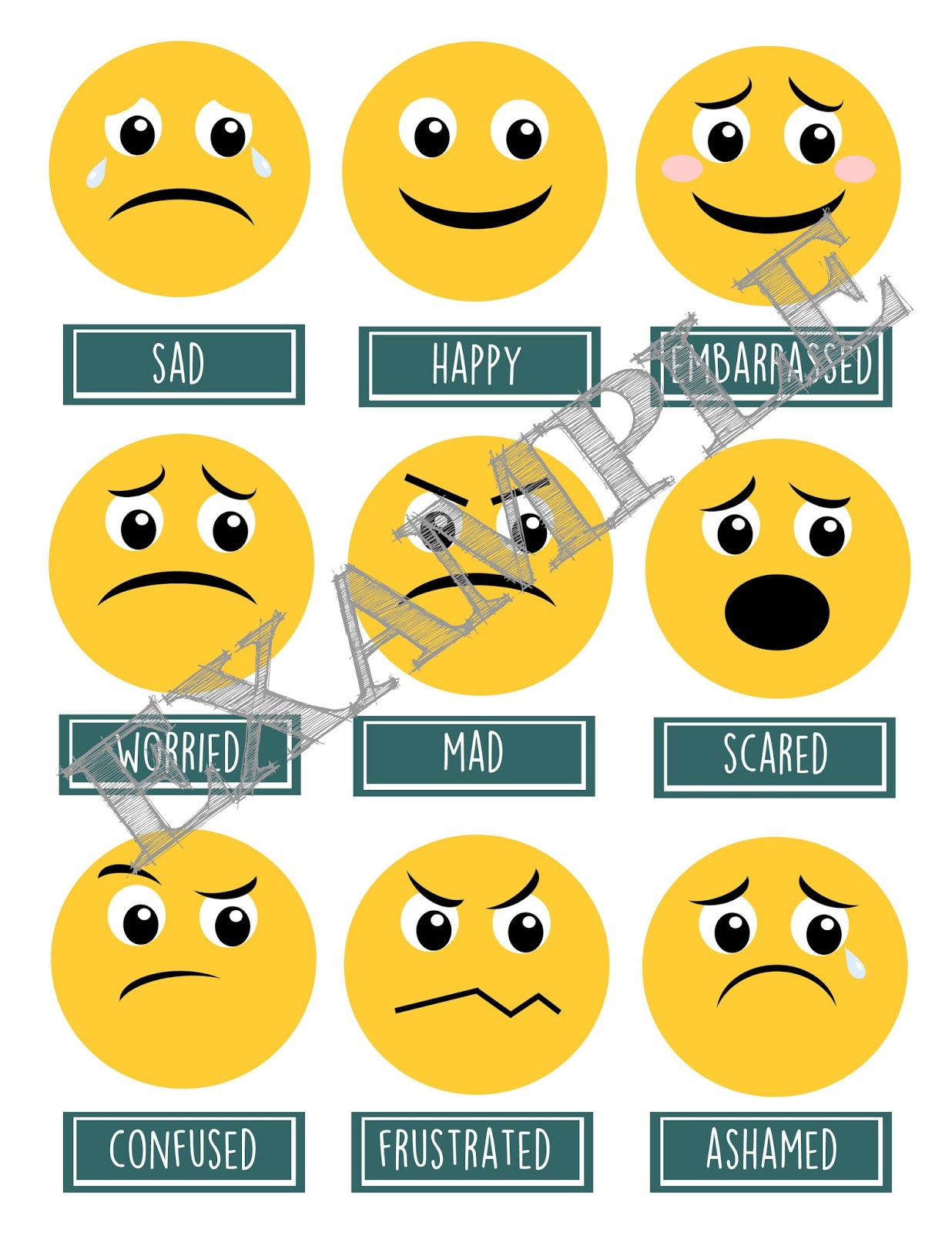


Our Safe Place is such a huge hit in our family even my 10 year old will occasionally rest there. And I love that:) 
Occasionally my 3 year old will play with the faces and swap them out. I'm OK with that too because it is through Play that children learn best. Also, I figure that although they are a great tool to have on hand when a tantrum erupts, she is likely to learn more from them when she is calm and happily pretending with them. 

If you would like to purchase this download CLICK HERE

and of course as always- 
HAPPY PARENTING!

Thursday, August 8, 2013

Welcome to the Life of Your Child- Understanding Tantrums Through a Change of Perspective

Imagine yourself in a foreign country- one that you know NOTHING about.

The land and countryside are like nothing you've ever seen before. There are trees and plants so beautiful and so perplexing you can't help but stop and touch every single one of them.


The culture is new and exciting at times to explore- but also scary and intimidating. You don't know the traditions, the history, you don't understand how the society works or why people do what they do on a day to day basis. You don't know what's appropriate and what isn't in this strange culture. More than once you've been scolded by those close to you and even complete strangers for saying something, touching something, or doing something that was considered inappropriate during your quest to assimilate and fit in.

The food is amazing, each texture unique, each bite an exciting new discovery either to your complete delight or sometimes utter disgust.

The people are friendly, mostly helpful, and sometimes weird and funny. You've become used to the unique attire they wear but every once and while you discover something new and different and find yourself playfully discovering funny eye coverings, pretty feet coverings, and colorful attire.

The language is most difficult of all. They have vowels and consonants that are difficult for you to pronounce. You try and try but your tongue and lips just don't want to cooperate as a team to make the unique sounds required to communicate with the people in this country. You're slowly beginning to understand certain words and phrases and you can communicate effectively enough to get your basic needs met- food, shelter, water, directions- but beyond that you are forced to use sign language, body language, hand gestures, and weird combinations of words and sounds you know are incorrect but hopefully good enough to get your point across.

Welcome to the life of your child.

This is EXACTLY the kind of experience your child is having in this strange and unknown world he has been brought into. In every culture, no matter how different or similar it is to yours, in every nook and cranny of this world, the experience for every child is the same and comparable to the above scenario I just described.


Now tell me that there wouldn't be days where you would be completely overwhelmed and exhausted leading to emotional polarized outbursts.

Tell me there wouldn't be times where frustration would lead to complete emotional meltdowns over lack of basic communication skills. Especially when your needs aren't being met and no matter how hard you try no one seems to understand what you are saying, how you are feeling, or what you need.

Perhaps a little perspective like this is all you need to help better understand, communicate, and connect with your child, especially when she is upset or throwing a tantrum for whatever reason.


You need to remember:


Sometimes a little perspective is all it takes  :)

Happy Parenting!


Friday, April 5, 2013

Yoga For Kids

I found THE coolest FREE  yoga videos for kids! Even my 18 month old got in on the action!


Your lovely guide through your Yoga adventures is Jaime- the cutest British thing in media since Pocoyo!


Each video is about 15 minutes long and your kids will go on adventures like:

Packing a picnic and visiting Squish the Fish

and Pretending to be a cat!


Over on her blog she has yoga ideas, lesson plans, teacher training, and even ideas on how to tie nursery rhymes into yoga poses! {She also has a DVD you can buy}

You can find all her YouTube videos in one place HERE.

We have been using these videos to wake our bodies up in the morning and my kids love them so much we'll even turn them on for a second or third time a day to get wiggles out or to calm down right before bed.


Wednesday, February 20, 2013

Teaching Self Regulation and Calming Techniques

I LOVE LOVE LOVE this idea!!
Set up a Peace Table/Mediation Corner in your home for your children to go to when they want/need to calm themselves down.

We currently use the Calm Couch, but I like this idea much better!

Found this idea via MontessoriMama

Wednesday, November 28, 2012

The Child Whisperer

I haven't read this book... but based on this advertisement/guideline it sounds like it might be a good read. If you are familiar with Hartman's The Color Code, it seems to me like it's basically the same idea transferred into parenting. Type 1 kids would be "Yellow personalities", Type 2 kids would be "White personalities", Type 3 kids would be "Blue personalities, and Type 4 kids would be "Red personalities".


To order the book or find out more Click Here

HAPPY PARENTING!

P.S. Check out my new Chore Binder System! You know... so you can free up that fridge and wall space most chore systems take up:)


Sunday, November 13, 2011

Alternatives to Time Out


One of my favorite sayings is,

"Discipline is different than punishment. Punishments are a negative outcome from negative behaviors. Discipline is about teaching!"

Cue my shpeal on TIME OUT's:

Almost everyone  I know uses "time outs" as a form of discipline for their children. 
Be it a corner
a time out stool or chair
or even facing the wall.

My personal opinion is that this is more of a punishment than it is discipline because it doesn't involve any teaching! It is simply a negative outcome from a negative act or behavior. 

(I will say that issuing a time out is better than doing nothing)
But let me give you 3 reasons to consider reducing or even eliminating the Time Out tool in your home:

1. Time Outs = isolation. Isolation teaches nothing of value! This is true from the age of 2 clear up until the teenage years! Isolation in younger children can cause stress and anxiety sometimes causing them to react even more difficult. Isolation in older children causes resentment on top of stress and anxiety. 

2. Time Outs are rarely related to the issue at hand, and young children are rarely able to relate the Time Out to the event that precipitated it.

AND MOST IMPORTANTLY...
3. Time Outs are usually thrown at children more for the parent than the child. It's the parent who feels they needs a break from the child, but the child more likely needs some instruction, re-direction, role playing, role reversal, and/or guidance.

Q: What are some better discipline techniques that actually involve teaching?
(before you read ahead make note that different circumstances call for different techniques. Using a different technique for different circumstances is more effective than simply issuing a Time Out for any and all incidents. 

The Calm Couch
The calm couch should be a designated area, preferably within sight of Mom or Dad that is used every time a child is throwing a tantrum, or has let their emotions get out of control passed the point of reason. I say this because children usually grow out of the tantrum stage, but teenagers are notorious for letting their emotions get the best of them. Once the child has calmed down, a loving heart to heart should follow with the parent sitting next to the child or kneeling on the floor looking up at the child. Children learn best from example so it is important that you remain calm while placing your child on the Calm Couch, while they sit there, and while you talk afterwards. It is important NOT to send your child to their room! Their room should not be used as a Calm Couch alternative.

CALM COUCH ON-THE-GO / The "Glitter Jar"
  
This technique is great for when you are in the car, on vacation, or even at the grocery store. It could also be used in your home as an alternative to the Calm Couch, especially if you don't have a couch within view of where you are at the time. The idea is to create the jar, {INSTRUCTIONS ARE HERE}and then keep it in your purse or somewhere else handy. Maybe make several! One for the car, one for your purse, etc. When your child needs to calm down, shake the jar and have your child hold it and watch the glitter fall, much like a snowglobe. They will have to sit very still in order for the glitter to fall completely! Once the
                 Source: Creative Little Daisy

glitter has fallen you can have your heart to heart and discuss their behavior.


Repentance Bench/Chair
The repentance chair, or preferably a bench so more than 1 can sit on it, is a place for children to go to discuss inappropriate behavior, say they're sorry and repent. This is a tool that is especially beneficial when there is more than 1 child that is misbehaving such as a sibling argument. It is important to use this tool as a way for the child to acknowledge their inappropriate behavior, say they're sorry, and then receive forgiveness. If more than one child is involved they should acknowledge their part, (NEVER FOCUS ON WHO STARTED IT OR WHO WAS MOST AT FAULT) say they are sorry to eachother, and then say, "I forgive you". to each other. A very important step in the repentance process is forgiveness. And teaching your children to forgive others, as well as themselves is an invaluable thing for them to learn!  If one child does not want to forgive the other, they should remain seated until they are ready. Again, when having your heart to heart, get down to their eye level!


Happy Parenting!

P.S. If you want to read a great article on how to teach your children to learn to cope with their emotions CLICK HERE. It is based on a parenting technique called "Emotion Coaching Parenting"

Saturday, October 29, 2011

Article: Taming Tantrums

“Teaching kids to control their emotions is huge," ...... "We can't take away their feelings, but we can control how they communicate them to us. This is something that has to be taught though."
The question then becomes... how do we teach them that?
How do you get through to a 3 year old right in the middle of a tantrum?

I found this really great article that teaches us just that! 
and you'd be surprised at how simple the concept really is. 

Here's a couple of my favorite quotes from the article:


"While it might be hard to remember in the heat of the moment, the ultimate goal of the parent shouldn’t be to punish, but rather to teach. When a child is in tears over a parents' refusal to drive thru McDonald's, or screaming and flailing around when the TV is turned off, it’s actually a golden opportunity to show them how to regulate their own emotions."

“Calmly lift and move the child from one location to another (e.g., floor to a couch). {Click HERE for my post about setting up a CALM COUCH in your home. It would be the perfect place for your child to go in this scenario}This shows you are in control of the situation," he said. "You might pat them on the back and gently tell them they seem frustrated at the moment but when they are calmed down you'd love to talk with them. This labels their feelings, shows empathy, but requires a change in their behavior before you will give them your full attention. Your calm and compassionate approach will also serve as a reference for children who will then be better able to calm themselves.

I posted another great article a while ago called:
Click on the link above to learn how to teach your children to identify and cope with their emotions